
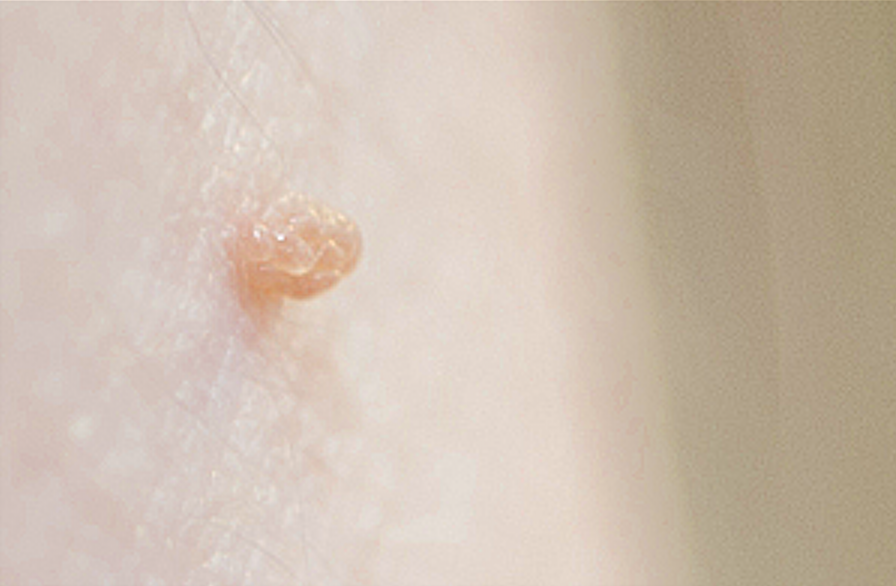
Skin tags are small flesh coloured or brown growths that hang off the skin, they can look a bit like warts. They are very common and harmless.
Skin tags are usually a few millimetres in size, although can be as big as 5cm.
They are usually found on the neck, in the armpits, around the groin or under the breasts. They can also grow on the eyelids and under the folds of the buttocks.
The medical name for skin tags is Acrochordons.
Why skin tags occur
Anyone can develop skin tags, but they are particularly common in older people. Some people develop them for no apparent reason.
It is thought skin tags grow where skin rubs against skin or clothing. This would explain why they tend to affect overweight people who have excess folds of skin and skin chafing.
When skin tags can be a problem
Skin tags are harmless and do not usually cause pain or discomfort.
However, you may want to consider getting them removed if they are unsightly and affect your self-esteem, or if they snag on clothing or jewellery and bleed. You will usually need to pay for this procedure privately.
This is because the removal of skin tags is regarded as cosmetic surgery, which is rarely available through the NHS. Generally, the NHS will only carry out cosmetic surgery procedures if the problem is affecting your physical or mental health.
Sometimes, skin tags fall off on their own if the tissue has twisted and died from a lack of blood supply.
Removing skin tags
Skin tags can easily be surgically removed or frozen off in a similar way to how warts are removed.
If your skin tag is small with a narrow base, your GP may suggest you try removing it yourself by:
- tying off the base of the skin tag with dental floss or cotton to cut off its blood supply and make it drop off
- cutting it off with fine sterile scissors
Do not attempt to remove large skin tags yourself because they will bleed heavily.
Dr Teri Johnson no longer removes skin tags, but some of the other doctors who work with her at Cheshire Lasers do.
They use:
- Electrocautery – the lesion is excised using a fine electrical cutting tip instead of a scalpel.
- Cryotherapy – uses liquid nitrogen spray to create a ball of ice in the tissue, which freezes and destroys the lesion.
- Surgical Removal
Find out more about the procedures and who performs these treatments here.